Showing posts with label joke. Show all posts

Is your insurance protecting you?

Why you ask, is your insurance protecting you?

Well, you should know this story that appear in www.thestar.com.my/opinion

Baffled by insurance coverage rule

There seems to be some confusion in how our insurance companies operate insofar as car insurance is concerned. Please, can anyone spell out the real situation?

Here is my dilemma: A few months ago, a car knocked into mine. The driver admitted to causing the accident due to his negligence. He told me not to worry as he had comprehensive insurance and his insurers would pay for all the repairs to my car.

My car was quite badly damaged, especially the front of the vehicle.

It was towed to a workshop which was on the panel of workshops of the insurance company. That was when my nightmare started.

At the workshop, the foreman informed me that my car was more than 10 years old, and according to Bank Negara’s directive, it could only be reimbursed 60% of the insured value.

Is this true? It does not make sense to pay for insurance coverage at the market value of, say, RM36,000 when, if the car is involved in an accident, the owner can only claim 60% of this amount, meaning RM21,600 maximum, if the vehicle is more than 10 years old!

Could the car be insured at 60% of the market value (RM21,600) then, and the owner pays insurance coverage for that amount? How can you make a person pay insurance at market value of his car (RM36,000) but when it comes to reimbursement, you restrict him to only 60% of the sum he paid?

The foreman told me that in order for them to repair my car with new parts, I had to pay the difference between what the insurance company (the one that covered the driver who knocked into me) is paying (60% of insured value) and the actual cost to repair the car.

I refused and now my car has been in the workshop for almost four months!

Every time I visit the workshop, the foreman tells me it is difficult to find spare parts from the kereta-potong garages.

In fact, I had requested for a total write-off of my car and to be given the 60% of the insured sum. But here was another disappointment. The workshop’s foreman told me that the insurance company refused this option.

So, it seems, as a consumer, I am at a total loss. I haven’t been able to use the car for the last four months (and God knows how long more I have to wait), and in the end, even if I get it back, it will be hardly worth its weight in scrap metal, seeing that every part was replaced by spares from the junkyard.

Bank Negara, if this is the true situation in the car insurance industry, it is high time we make changes to benefit the consumers.

If there is any organisation or body out there who is willing to take up my case, I’ll be more than happy to take up the offer.

MORE THAN FRUSTRATED
Puchong


Lots of cash does not mean anything

Cash rich is everyone dream, right?

Not for this company.....

It is a company within authority surveillance, yet thousands still bear the brunt. Kesian.


Lowest price is on 5 June 2017 at 2 sen, the line goes flat thereafter. Maybe gone later. 

KYY pissed off. 

Danger times ahead


ekkamai-simplelife

ekkamai-simplelife

ekkamai-simplelife

When that man is worried, we got to be double worried. 

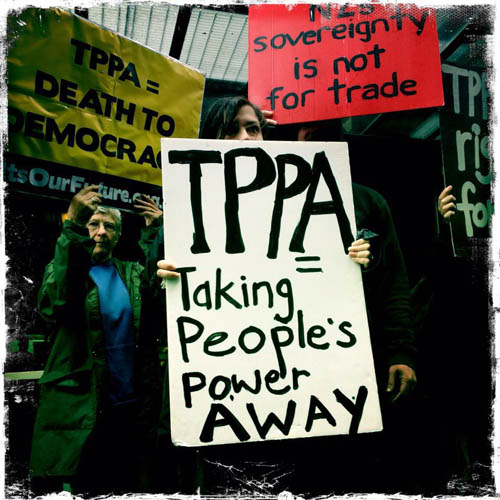
Dear Politician, Does Malaysia really need TPPA?


I've share the post about A matter of life and death, an article that get me interested in the TPP in the first place. This issue is not making life simpler but indeed going to make it harder. These are snippets of information dig out from various sources.

I've made up my mind about this issue and you had a chance to read through links below and decide.


View#1
"That (TPPA) is not a trade deal, it is an investment deal," said Dr Jomo Kwame Sundaram, who is also assistant secretary-general of economic development in the United Nations' Department of Economic and Social Affairs (DESA).

"Malaysia gets next to nothing. I was extremely disappointed and I think it is going to affect not only the Malaysian business community, but also the consumers and citizens adversely," he told reporters on the sidelines of the Khazanah Megatrend Forum 2015 today.

He said the agreement is mainly driven by "political considerations" for the US to isolate China.

"Hence, it (TPPA) is not really to help Malaysia, and (the) trade advantages are very minimal," he added.

Jomo cited Malaysia, which has been producing solar panels, being prohibited to sell the solar panels in the US and elsewhere under the pact.

"This is contravening the multi-lateral trade agreements and I do not expect the TPPA to overcome this," he said.

According to Jomo, the main impact of the TPPA would be the increasing cost of intellectual property, which will have many implications on electronics and cost of medication.

"We can wipe out many diseases in the world, but the people who control the drugs are depriving people of the world from benefitting it," he said.


View#2
What was promised to us is a Parliamentary debate, not approval. Under Malaysian law, trade agreements, the TPPA in particular, do not require parliamentary approval. The power to decide rests on the Executive.

5. This is a done deal. No country has ever walked out of an agreement after negotiations have concluded.

9. The release of a Cost Benefit Analysis (CBA) or National Interest Analysis had been promised and postponed since end of last year to every consecutive month since May 2015 to date. Until now, it has not been released and we only have three (3) months from the official date of negotiation’s conclusion to the date that it has to be signed. The CBA, if finalised and released earlier, would have provided the public and interested parties with a greater understanding of the TPP and its implications.


View#3
“If instituted, the TPP’s IP regime would trample over individual rights and free expression, as well as ride roughshod over the intellectual and creative commons,” Assange said. “If you read, write, publish, think, listen, dance, sing or invent; if you farm or consume food; if you’re ill now or might one day be ill, the TPP has you in its crosshairs.”

“No wonder they kept it secret. What a malicious piece of US corporate lobbying. TPP is about world domination for US corporations. Nothing else. We will stop this madness in New Zealand,” he told RT’s Andrew Blake.


View#4
If you still haven’t made up your mind, read the chilling “The Trans-Pacific Partnership and the Death of the Republic” by Ellen Brown of the Public Banking Institute. Is it all hyperbole, or could things be as ominous as they seem?

The TPP, which involves 12 nations and 40% of the earth’s trade, has been called “NAFTA on steroids.” (NAFTA, recall, was the North Atlantic Free Trade Agreement of 1993 negotiated during the Clinton Presidency). Every such agreement has been sold to the public by the promise that free trade floats all boats. What’s the reality? According to Buchanan, “… almost all [the big trade agreements] have led to soaring trade deficits and jobs lost to the nations with whom we signed the agreements.” Over the past four decades of free trade, America, cites Buchanan, has lost 55,000 factories and 5-6 million manufacturing jobs, all while racking up $11 trillion dollars in trade deficits.


View#5
Trans-Pacific Partnership Free Trade Agreement Permits Corporations To Sue States
Leaked TPP investment chapter: Corporations can sue states in private courts


View#6
Malaysia will lose RM75billion & the government can be sued - Listen to podcast.


So my question to beloved politician, does Malaysia really need TPPA? Think hard rather than aye sir!


photo credit - bilaterals.org

SPAC money spinners?

Article by: Random Trading in Aug 2014

SPAC is a wonderful thing..... for the promoter, initial investor and of course selected investors including the so-called cornerstone investor that can get the share directly by private placement. Take the latest SPAC IPO, Reach Energy for example.

When I went through the prospectus of the IPO, I'm quite puzzling about the allocation of the shares available to the public. Basically there are 1 Billion shares issued with 1 Billion free warrant attached with it. What makes me baffling is that 980 Million of those shares are applicable to 'Selected Investors' which include cornerstone investors. Looks, 98% of the 'Public' portion goes to the 'Selected Investors' and the pathetically 20 Million shares are allotted to the 'Real Public' like you and me. Seriously, only the meager 2% are offering to the Malaysian Public and you call it IPO. Why don't you guys just ask another 'Selected Investor' subscribe the rest and keep the company private for your club members. The 42 times oversubscribe is just another joke. Why did our authority allow this blatantly abuse of IPO a green light. You know what is the worst part of it? There is moratorium on the promoter and initial investor BUT NOT THE 'SELECTED INVESTOR' & CORNERSTONE INVESTOR!!! WHY? Ohh... because they are deem to be pubic allocation so no need for moratorium. WOW!!! NICE!!!

Then, who is these 'selected investors'? I don't know because I can't find any of that information from the prospectus. If any one knows please let me know. Also they didn't mentioned the criteria to become 'selected investors' because I believe the real public really want to know so that we can qualify ourselves to become 'selected investors'. Why Bursa didn't compel them to disclose the information of these 'selected investors' since they take up almost all the IPO's shares? Are they related to the promoters or initial investors? Don't you think it is important since if they are related then there is a very high chance they can circumvent the moratorium to make a quick bucks out of it. Why the Minority Watchdog didn't bring the issue to the authority?

Further breakdown of the shareholding of the enlarge Reach Energy as below:

Reach Energy Holding (Promoter) - 20%
Daya Material (Initial investor) - 1.74%
Selected investors - 76.7%
Real Public - 1.56% (Who ever successfully subscribe this portion can consider themselves extremely lucky)

Then below is the effective cash cost per shares for the various shareholders: (This is mind-blowing)

Reach Energy Holding (REH)
113.6M shares + 113.6M Free Warrant (FW) @ 0.045
142M shares + 142M FW @ 0.099
Total cost RM 19.17 Million for total 255.6 M shares + 255.6 M FW

Daya Material (I will just provide the cost directly instead of showing the calculation)
Total cost RM 20 Million for total 22,222,225 Shares + 22,222,225 FW

Selected Investors & Real Public cost is RM 0.75 per shares + FW

So just take the closing price of 1st trading day, Reach - 0.705 & Reach WA - 0.225

Paper gain for :
REH = RM 218,538,000
Daya = RM 666,667 ( not so much, probably that's why its share price fall)
Selected Investors = RM 176,000,000 (ohh ya! this is not paper gain since they can actually sell it)

Real Public = RM 900,000

Ya. They do gave the reasons to justify why the promoter should allow to have that potential gain :

1) They invested RM 10M before the IPO so if IPO failed to go through then they will have to absorb the lost. (basically they are telling us that they make a bet of 10 M for potential of more than 200 M)

2) The remuneration of the management team came from the fund that promoter put in, not the public subscription money. But they forget to mentioned that the management team is actually the promoter so the money is just left hand out, right hand in. So, where is the risk?

3) In case they failed to make QA within stipulated time, they might not get the pro-rata refund from the trust money. Well, since they already cycle back their initial fund from the remuneration, I don't see they have anything to lose at all.

Ya, I forget to show you the management team remuneration package: (I purposely took off their names)

So, whether they are justified to allow the potential WINDFALL or not, I leave it to you to make your judgement.

That's why to me, SPAC is the most brilliant invention of modern stock market.

spac-malaysia
Off from day one, until....
Related Article >>> Data con?


UPDATE: 25Feb2016

Cliq to be liquidated, SC rejects request for deadline extension

Probably the first in the series. 

Conned by investing

Investors got conned, DIY investing is what you should master. Why?


-When they tell you to buy, chances are they want to unload desperately. And when they tell you to sell, they want to buy every single shares that you’ve got. So trust no one who screams buy or sell.

- The market doesn’t care how much you paid for a stock or what you think is a “fair” price. So, when stock brokers or investment banks publish analysis about “fair” price, you know what craps they are talking about. But that’s their job, so don’t blame them.

-The majority of market news is not only useless, but also harmful to your financial health. Despite the fact that you’ve access to information faster than it was 40 years ago.

-Professional investors have latest information and faster computers than you do. You will never beat them short-term trading. Don’t even try. And if you manage to, that’s pure luck and chances are you will not be able to do it again.

-How much experience a money manager or fund manager has doesn’t tell you much. They can underperform the market for an entire career. And many have, but they still keep their job, because their job was not to make money for other than you.

- Markets go through at least one big pull-back every year, and one massive one every decade. Get used to it. It’s just what they do in order to make money. And if you can’t stomach this, don’t lay a finger in the world of investing.

-Saying “I’ll be greedy when others are fearful” is much easier than actually doing it. The fact is when others are fearful, you’re doubly as fearful, and vice versa.

-There will be 7 to 10 recessions over the next 50 years. Now that we have told you this, don’t act surprised or dumb when they come. Being greedy when the market fall more than 50% is a wise move. This is the real buy n forget strategy.

-Don’t fall in love with companies you invest. Companies die and new ones emerge. Treat them as prostitute or gigolo whom you’re interested to get orgasm, nothing more than that.

- If you have credit card debt and are thinking about investing in anything, stop and think again. You will never beat 18% to 36% annual interest, some on daily or monthly compounding.

-However much money you think you’ll need for retirement, double it, or better still triple it.

Wealth means the number of days you can survive forward when you stop working right now - hmm, this is interesting!

How?
1. Pay yourself first
2. Don't buy an expensive car
3. Do compounding


Cheap property at auctions?


The dark side of property auctions


KUALA LUMPUR: Mr A, who has a “hot property” worth RM1mil, can suffer twice over when he cannot service his bank loan anymore.

While the bank has taken steps to auction his property, Mr A also has to worry about syndicates keeping the sale price down, causing him to pay the bank back more.

A property valuer may recommend a reserve price of RM700,000 but the owner is often deprived of getting the best value (anything above the forced sale value) because cartels pay off genuine buyers in a bid to keep the sale price low.

This scenario is played out at many auctions, said real estate agents.

They said syndicates monopolise the auction of titled properties.

“They form a cartel. They pay off genuine bidders depending on the value of the property,” said an agent who declined to be named.

Another agent claimed that the syndicates were willing to pay between RM1,000 and RM15,000 to genuine buyers to get the property at the reserve price, which is almost always below the market value.

They said registered bidders do take “under the table money” to withdraw from the auction and it is a “common practice”.

They said that those manipulating the auction process could be the lawyers, auctioneers, bank staff and court staff, adding: “The lawyer can also be in cahoots with the auctioneer and the bank.

The National Consumers Complaints Centre (NCCC) received 128 complaints from property owners with regard to court auctions in 2012 and 149 last year.

NCCC legal and dispute resolution manager Santhosh Kannan said they claimed they did not receive any notice from the banks when they failed to service their loans.

“When we queried the bank, they (bank officials) claimed they had done their part (in sending the auction notice to the property owners) and the problem could be with the post,” he said.

As a result, Santhosh said many did not turn up for the auction of their property and lost them at way below market prices.

This hurts them further because they will have to pay the bank more to cover their loan, he said.

“They should get some money after the sale of their property and not lose everything,” he said.

“Ironically, after the house is auctioned off, only then do the complainants receive the notice (on the sale of the property).”

Santhosh called for better guidelines in running auctions, saying it was difficult for complainants to take legal action when they are “cheated”.

“How can they hire a lawyer when they do not have enough money to do so? It is a losing battle for them,” he said, adding that such cases occurred mostly among the lower and middle income groups.

The agents and NCCC urged the judiciary to check for weaknesses before implementing e-bidding.

Technical trainer Raja (not his real name), who claimed to have been victimised during the auction of his shoplot in Bahau by the Seremban High Court in 2008, said there was room for abuse in e-bidding.

He asked how a bidder registering with 10 different identities would be double-checked and how the court would verify bidders’ payment of the 10% of the reserve price.

But he agreed that e-bidding had advantages, as it could help avoid ugly scenes at the court premises by dissatisfied bidders.

“It is also good because bidders will not need to travel to the court for the auction,” he said and asked the court to ensure only up-to-date valuation reports were used.

source: thestar 30sep14


DIBS – Dubious Scheme


“The prospect of buying a suitable house is looking bleak. The average rakyat is struggling to purchase their dream house amid the ever-rising prices of properties, which have far outpaced the increase in salaries.

“Young adults are unable to afford a reasonable, suitable and liveable house that doesn’t require either taking out a back-breaking bank loan or moving out to a distant and bland housing estate that involves mind-numbing daily commutes.”

Chang adds that young adults are slowly becoming a “homeless generation”.


Why developer interest-bearing schemes should be banned

The Developer Interest-Bearing Scheme (DIBS) is marketed in such a way whereby the house buyers pay a small down payment during the signing of the sale and purchase agreement (SPA). 
The developer will bear the interest due during the project construction period until the handing over of vacant possession where the house buyer will have to come up with the remaining payment.


Developers are fond of the DIBS because it is a smart marketing tool which can be used to entice potential house buyers into believing that they have found a good financing deal, especially those who do not know the implications or read the fine print of the terms of the agreement in the event of project abandonment.


Under the Built-Then-Sell (BTS) 10:90 concept, the law has been amended and is found in Form I (for landed properties) http://www.hba.org.my/laws/housing_reg/2007/schI/schI-2007.htm and Form J (for strata properties) http://www.hba.org.my/laws/housing_reg/2007/schJ/schJ-2007.htm of the Housing Development (Control and Licensing) Regulations, 1989 (amended 2007). It has been in operation since Dec 1, 2007.


Spot the differences
Some developers have even equated DIBS as being the same with BTS 10:90. However, this is not true. If DIBS are not the same as BTS10-90, what then is the difference? Simple.


i) BTS 10:90 uses either Form I or Form J found in the HD Regulations. The BTS 10:90 is the financial model announced by the previous Housing Minister 2012 for financing housing projects come 2015. Under BTS 10:90, should the developer fail to complete the project as promised, the house buyer only faces trouble with the 10% deposit, which he/she may try to recover through the existing legal mechanisms.


ii) DIBS, on the other hand, are a “willing seller-willing buyer” SPA cunningly crafted by developers and are in contradiction with the current housing legislation. Under the DIBS, the house buyer has agreed to be responsible to the banks/financial institutions for the loans signed under the SPA whether the houses are delivered or not. This is the moral hazard the Government is trying to prevent the house buyers from getting into.
Developers, being entrepreneurs, have to be responsible and bear the risks that come with investment. They should not be allowed to enjoy profits at the expense of house buyers who have to bear the risks on their behalf. 

Thus, when developers claim that the schemes are good because they “assist new purchasers”, they should be asked to use the BTS 10:90 instead if they are sincere in not wanting to shift the risks to the house buyers. Developers being profit-driven, merely want to sell their products by whatever means, even recommend the DIBS for “first time house buyers” on the guise of “assisting them”
Are we saying that the Minister of Housing can’t spot the differences? If the Ministry of Housing promotes such DIBS schemes, then surely it must be the developers’ ideal marketing tool.
Interest element factored into DIBS “schemed” properties.


DIBS properties are also priced much higher than non-DIBS properties as there is “no free lunch” as the saying goes. Whenever a developer says that expenses such as “interest during construction”, legal fees and/or stamp duty are absorbed by the developer, ultimately the cost of such “freebies” or “rebates” as they are called will be added back and factored to the purchase price of the property.
Based on past samples of comparison between DIBS properties and non-DIBS properties (see chart), the price difference is 10% to 20% and some even as high as up to 25%. 
That would mean that if a property was proposed to be launched at RM500,000 and if the developer were to offer DIBS, the developer would be pricing the said property at RM600,000 to cover for so-called “interest cost during construction (say three years)” that the developer is absorbing.


This artificially inflates property price which has a push effect on:
> Prices of subsequent new launches as future launches must be priced much higher than RM600,000, probably closer to RM700,000, thus making subsequent new properties more unaffordable.
> Prices of existing properties can also increase overnight by up to RM100,000, thus making existing properties also more unaffordable.
Property prices also have a spillover effect and can push up prices properties in surrounding locations. Properties launched in Mont’ Kiara will immediately push up prices in surrounding locations including Kepong and Segambut which will eventually affect the cost of properties in Cheras, Kajang and Semenyih too.


High level
Once prices of properties have reached an artificially high level, it is very difficult to bring them down again without adversely affecting the owners and banking institutions. What we can do is to slow down the steep escalation of house prices due to excessive speculation and other artificially inflated pricing methodology such as the DIBS.
The DIBS also encourages syndicated speculators to enter the scene. Basically through DIBS, speculators can enter the market with very small capital outlays. In brief the following occurs:
Speculators approach developers to offer bulk purchases or developers offer syndicated speculators bulk sales with “seemingly attractive discounts.” 
I stress on the words “seemingly attractive” discounts because in reality, the selling price is already being marked up. From this marked-up price, a discount/rebate is given by way of a credit note. 
This credit note is then converted and deemed to be deposit/down payment paid by the speculator buyer.


Thus one can see that one can buy a property with near zero upfront payment. This scheme may not work without the collaborations of valuers and banks. Sometimes bogus sales based on inflated prices are executed to set elevated benchmarks so that valuers can justify the inflated values based on the price that was last transacted. Thus, it can be seen that houses prices are pushed up on two counts.
Firstly, developers have to factor in the interests that they have undertaken to pay on behalf of the buyers, secondly they do so to offset the rebate/ discounts that they have built into such schemes.
Banks traditionally base the quantum of loan against the valuers’ report. Being loan disbursements target-orientated, they pay scant attention to the actual values of properties that their clients have purchased.


Laughing to the bank
The chief beneficiaries of the DIBS are the developers – they can flock off their products quickly and the banks/financial institutions – they can give out higher loans to achieve their monthly target.


DIBS – dubious scheme
DIBS or any other permutation similarly “schemed” cannot be allowed to continue for the betterment of the housing industry as it risks creating a property bubble as the property prices have been artificially increased and they create a snowball effect. As property prices get more unaffordable, the younger generation cannot afford to own their own properties, social problems can also arise.

DIBS prohibition announced in Budget 2014 had been effective in curbing the unbridled escalation of house prices. DIBS must continue to be prohibited and outlawed. Do not allow first time house buyers to be deceived.


Imagine, these young adults are just entering the work force and these burdensome loans (with DIBS factored in) comes with a financial commitment to service a debt. The young people must diligently pay monthly instalments to the banks they are committed to. 
They may be sued by the banks for breach of contract or non-performance or risk their home being foreclosed should they default in any of the periodical instalments. Do you want our young adults to be enslaved by the banks and financial institutions?

From another perpective, an undesirable household economic situation is created when a large proportion of household income is taken up to service a housing loan. Responsible individuals are compelled to ensure that they do not default on their loans. Malaysian household debts are already among the highest in the world. All these enticements will only worsen the situation.

Many households may fall victim to temptation and may overstretch themselves financially and eventually get into the “camel’s back” situation. It also creates an unbalanced economic situation in the country whereby in order to service the housing loans, families will drastically cut back on other expenses such as entertainment, holidays, clothing, education, etc.
In sum, families’ are compelled to lower the quality of life, all for the servicing of housing loans! Consequently, the other sector of the economy such as the entertainment, travel, food and beverage and garments will end up picking up the crumbs.

Chang Kim Loong AMN is the secretary-general of the National House Buyers Association, a non-profit, non-governmental organisation manned purely by volunteers.

source: thestar 20sep14

We support you!
           

The Homeless Generation is getting bigger


Should we still allow ‘sell and build’ concept?

WE refer to the report “The young find it difficult to afford a home” (Sunday Star, Sept 28).

The price of property is rising because of rising material, labour cost, inflation and speculation.

Speculation occurs when there a developer develops property on a “sell and build” (SAB) basis.

Properties are constructed and delivered over 36 months. Mega developers would launch their product by phases. Every new phase is launched with minor cosmetic appearance with the price increased by 15% to 25%.

This encourages people to rush and buy houses before the next phase is launched, as they would want to make quick capital gains.

The developer interest-bearing scheme (DIBS) encourages developers to act as an unlicensed financial institution when they say they subsidise the interest during construction period.

The developer actually transfers the interest cost into their product cost and force the buyers to pay for it via bank loans.

In other words, banks gains interest during the construction period. This contributes to higher property prices and household debt.

Malaysian household debt has risen to a worrying level. The large proportion of this debt is due to anxiety of potential buyers afraid that they cannot afford to buy properties in the future.

It is a vicious cycle that damages individual economies. The combination of developers marketing strategy that focuses on people’s anxiety is an important factor.

Many people own more than one house and use the extra houses as an investment. It is quite a possible to earn 100% gain within three to four years after a house is completed.

The solution to this problem is clear. Developers must not be allowed to practice the SAB concept.

They should only build and then sell (BTS). It is morally wrong for anyone to sell something that does not exist.

In Malaysia Islamic loans by the banks are being allowed to finance something that is not syariah compliant. The SAB concept also contributes towards the rising number of abandoned projects.

Despite all control measures imposed by the Housing and Local Government Ministry, between 2009 till Sept 2014, the numbers of abandoned project increased from 68 to 212 projects.

This in turn increases the burden on the ministry in trying to help the house buyers.

It appears that developers are only interested in making a profit but when there are problems, they walk away.

It is time that Bank Negara orders banks to stop providing loans to support the SAB concept. This will deter property speculation, prevent abandoned housing and address oversupply.

The Housing Development (Control and Licensing) Act 1966 (Act 118) has the legal provision to support the BTS concept and it is Syariah compliant.

DR MOHAMED RAFICK KHAN
President
Victims of Abandon Property Owners Malaysia

source: thestar 30sep14

Lucky childrens!


HBA: Build-then-sell system safer way to build houses


ABANDONED housing projects in the country continue to be a dampener to the hopes of many house buyers and their families from realising their dream of being owners of their own homes.

Its continued presence remains a thorn in the housing industry that does not bode well for the wellbeing of the affected house buyers nor the reputation of the errant developers.

Although the majority of developers have fulfilled their delivery promises to house buyers, there are still some “bad apples” that have reneged on their end of the bargain when they abandoned projects.

Chang:'The BTS 10:90 is a far safer mode of home delivery system'.

Besides causing dilapidated environment, abandoned projects also cause unnecessary hardships to many people as they need to continue with their monthly bank instalments for their housing loans, and in many cases unless the projects are successfully revived, there will be no end in sight as to how long they have to bear their ordeal.

Championing the plight of the affected buyers is the National House Buyers Association (HBA) which has urged the Government to make good the implementation of the build-then-sell (BTS) 10:90 system as the industry’s housing delivery model from 2015.

HBA secretary-general Chang Kim Loong urges the Government not to deviate from the original road map to implement the BTS 10:90 system put in place under the Housing Development (Control and Licensing) Act and Regulations.

“The Government had in 2012 reiterated the BTS 10:90 system will be made mandatory by 2015, and hopefully it will hold true to its word of making this housing delivery system mandatory come next year,” Chang tells StarBizWeek.

Under the BTS 10:90 system, house buyers only need to fork out the initial downpayment of 10% when booking a house and do not need to make any further payment until the vacant possession of the property is delivered to them.

As such, the servicing of the end-financing loans do not kick in until the houses are completed with all the certifications obtained and keys with vacant possession are presented to the buyers.

Chang says the Government’s abandoned project revival efforts do not seem to be able to match or counter balance the fresh problematic projects that have been labelled as “sick” or “delayed” that continue to come on line.

“The BTS 10:90 is a far safer mode of home delivery system and the Government should without further delay, compel the housing industry to adopt the system as we believe it will drastically if not totally eliminate cases of housing projects being abandoned.”

He says this is precisely why the Government is encouraging it and offering incentives to developers who opt to adopt this mode of selling their products.

“But it fell short of compelling the industry to adopt this BTS 10:90 concept concurrently,” Chang notes.


But is the BTS 10:90 system the answer to the menace of abandoned projects in the country? Khong & Jaafar Sdn Bhd managing director Elvin Fernandez thinks not.

Voicing his reservation about the efficacy of the BTS 10:90 system, Fernandez says if the BTS 10:90 becomes the sole mode of housing delivery for the country in replace of the sell-of-the-plan mode of housing delivery, it will be highly negative for the market.

“The market will slide downwards into an oligopolic market. If the BTS is legislatively imposed on the developer, he will transfer the cost to the buyer or cease developing which means the number of players will be substantially reduced.”

Fernandez says if the new rules allow both the BTS and the sell-then-build (STB) systems to co-exist it will be a better system.

“One has to understand the role of the developer in the market. He is but a middle man, assembling a site, taking risks to bring the product to market.” While admitting there may still be abandoned projects in the present system, Fernandez says they should be dealt with appropriately such as by way of adopting a better project financing system and better monitoring of developers.

A better alternative

Speaking up for the BTS 10:90 system, HBA vice-president Brig-Gen (R) Datuk Goh Seng Toh says basically the BTS 10:90 creates a more orderly system of financing in that banks give project financing to developers and buyers are not subjected to this early stage financing.

“House buyers pay only 10% upon entry. Project financing covers only the construction and the incidental/accessory costs. Developers’ profits are not factored in. Rightly so, as developers should collect their profits only upon completion of their projects. This will also have a stabilising effect on house prices because banks would want developers to show proof of committed sales (percentages) before they would approve or release the project financing. Hence house prices would be placed at realistic and current values in order to secure sales. Over-priced houses will not sell and this would be a big problem with regard to getting bank approval for project financing,” he explains.

Goh: 'The housing industry and financing go hand in glove'.

Goh says with this safer system created by the BTS 10:90, banks may even consider lowering interests as cases of abandonment will be largely diminished and correspondingly bad loans within the housing industry will reduce.

He says currently the large number of abandoned projects in the country is tying up large amount of dormant funds. When this is reduced, financing costs can also reduce and the industry will benefit.

On the argument that house prices will go up, Goh says the claim that house prices will jump many folds is “based on the wrong premise that the industry will shrink”.

Goh says this point had long been one of “the frighteners” or “fear tactics” touted by interested parties.

“It is at best a conjecture without any solid justification. It is a wrong premise intentionally adopted by the opponents of the BTS10:90. This wrong premise is that in the current system of sell-then-build (STB), the buyers are the ones financing the housing industry. Hence the argument is that if you take away this financing by the buyers, the industry will collapse. This is not true.

It is the financial institutions that are financing the housing industry. The housing industry and financing go hand in glove. Even big and cash rich developers conduct their businesses using financing and not entirely from their in-house funds. This has to do with leveraging, risk spreading and taxation,” he points out.

Currently, under the STB, banks lend money to house buyers and these funds are then channeled to pay developers. The risks to banks is that if the houses are not completed (ie the project fails) for whatever reason, buyers become defaulters.

“When one project fails, there are perhaps hundreds of defaulters. Revival of any abandoned project becomes very problematic within a legal quagmire. This is due primarily to the situation that within any failed project, there are multiple banks that have given end financing loans to the buyers. The collateral is held by multiple banks with each holding multiple liens to the various lots. “Hence the banks also suffer losses. Buyers may become bankrupt, developers hide behind the corporate veil and often escape using crafty corporate maneouvres. Banks are left holding collaterals that have little or no cashable value unless revival effort is successful,” he says.

He says whereas in a BTS 10:90 system, the bank deals only with the developer and the parcel of land remains wholly within the control of the project financing bank, unlike the present situation where no particular bank has control over the multiple lots under development. “In fact with banks operating within a less risky environment, it will encourage more willing financing from them. The Association of Bankers have consistently stated that they do not discriminate between big or small developers or whether the sell-then-build or BTS 10:90 is adopted. Their main criteria is viability of any project. Herein lies another advantage of the BTS 10:90 in that there is another audit put in by the project financing banks before a project is launched. Chances of project abandonment is further trimmed.”

Goh says HBA believes that with a more orderly system, the housing industry will be more stable and stronger. Banks will be operating in a safer and lower risk environment due to the more logical structure of financing the industry.

He gave HBA’s two observations on the matter. Firstly, developers now have to factor in the interests into the costs of their product but these interests should cover only the construction costs and it is also not a one-time outright payoff. “Project financing is released in stages in accordance to the developers’ stages of construction. Herein lies another unseen advantage. The onus is now on developers to complete their projects as early as possible in order to minimise their finance costs. Hence cases of delays will be reduced.”

Secondly, buyers are already paying the unseen costs by way of progressive payment interests even before the houses are completed. Thus, any price increase brought about by developers having to carry their finance costs will be offset by the savings on progressive interests.

“Within this safer system of financing, banks should be more willing to support the industry with cheaper financing costs. This will certainly have a positive effect on supply and pricing,” he says. 

source: thestar 19jul14


Check out this video HERE.

A-S-S-K-I-S-S-I-N-G


If: A B C D E F G H I J K L M N O P Q R S T U V W X Y Z is represented
as: 1 2 3 4 5 6 7 8 9 10 11 12 13 14 15 16 17 18 19 20 21 22 23 24 25 26....

Then: H-A-R-D-W-O-R-K 8+1+18+4+23+15+18+11 =98%
And K-N-O-W-L-E-D-G-E 11+14+15+23+12+5+4+7+5 =96%
But , A-T-T-I-T-U-D-E 1+20+20+9+20+21+4+5 =100%

And, B-U-L-L-S-H-I-T 2+21+12+12+19+8+9+20 =103%

AND, look how far ass kissing will take you.
A-S-S-K-I-S-S-I-N-G 1+19+19+11+9+19+19+9+14+7 = 118%

What they say...

Silver