Showing posts with label rules. Show all posts

Hak dibawah Akta Strata

Siapakah yang pertama akan didakwa dibawah Akta Strata. Kita tunggu dan lihat kemunculan kambing hitam tersebut walaupun yang putih amat sedikit.

ekkamai-simplelife
klik imej untuk besarkan

akta-strata

akta-strata

one up on wall street - peter lynch


favourable attributes of a company

1. It sound dull, ridiculous
dull name, less attention eg. 3 stooges

2. it does something dull
eg. manufacturing cork, bottle cap

3. it does something disagreeable
eg. deals with dirty sludge

4. it's a spin-off
eg. separation of companies into freestanding entity

5. institution don't own it & analyst don't own it

6. rumours abound: involve in toxic waste, mafia

7.something depressing about it
eg. funeral home

8. its a no growth industry
eg plastic fork/knife, boring, no competition

9.its got a niche
eg. rock pit, drug, drug companies

10. people have to keep buying it
eg. cigar, softdrink

11. its a user of technology
eg. use technology to cut cost

12. the insider are buyer
eg. workers buying its company share

13. the company is buying back its shares


comparing growth rate to PE ratio
eg. long term growth=x%
dividend yield=y%
PE ratio=z
factor=(x+y)/z
look for >= 2, 1.5=ok, less than 1=poor

evaluating the cash position
eg
cash+marketable securities=5.7+4.4=10.1b
long term debt=1.8b
cash position=10.1-1.8=8.3b
outstanding sh=500m
net cash/sh=8300/500=16.6 (ignore st debt)
say sh is trdg at 38, net buying is 21.4 (38-16.6)
if expected earning/sh=7
at 38/sh, PE=5.4 (38/7)
but at 21.4, PE=3.1

say other biz in the group is contributing earning of 1.6/sh and its PE its 10.
so, its value is 1.6x10=16, extracting 21.4-16=5.4

therefore the net buying of this share is only at 5.4 although we are purchasing it at  38.
these type of value may emerge at any time but definitely at when the whole market  is under distress, bad economic situation, share market plunging.

continue searching.....

Damages for late delivery of house

Please learn that you are entitle for damages for late delivery of your house. Don't let the developer gets away with tons of our money. Due to "sell first" concept, we finance their venture and do you accept when they don't deliver as scheduled? Learn your option.

--------

Addressing and defining vacant possession.
“MY new house is ready and I can now collect my keys,” or so the house-buyer thinks. No more having to pay rent.
But his dreams come crashing down, however, when he is informed that although he may have gained vacant possession, he cannot not move into his house because the Certificate of Fitness for Occupation (CFO) is not ready.
Months later, he receives a copy of the CFO, and when he asks to be compensated for the delay, the developer says liquidated damages for late delivery (liquidated ascertained damages or LAD) is calculated up to the date of their notice for delivery of vacant possession and not up to the date of the CFO.
Who then is to compensate the house-buyer who has to service a housing loan for a house he or she is not allowed to occupy, and who, at the same time, pays for a rented place while waiting to move in?
This is a common scenario faced by house-buyers for years.

Is the house-buyer entitled to damages up to the date the CFO is issued? The answer is a definite yes, if the sale and purchase agreement (SPA) is in the format prescribed by the Housing Development (Control & Licensing) Act, 1966 – year 2007 amendments, according to a recent decision of the Tribunal for Home Buyer Claims, a.k.a. the Housing Tribunal.
Recently I was in the vicinity of the Housing Tribunal located in the Wellbeing, Housing and Local Government Ministry building, and decided to pay a visit before my next meeting in Putrajaya.
As I entered the hearing room, the ongoing case involved a claim for LAD. It was by no means a simple LAD case. The developer’s defence ran into several pages and touched on several legal technical issues. I am writing this article to share with the readers the LAD issue vis-a-vis the CFO as opposed to the certificate of completion and compliance (CCC).


Is LAD calculated up to date of CFO or CCC?
Having stressed that the delivery of vacant possession in a housing project entailed more than just developers issuing their notice for delivery of vacant possession, the tribunal president went on to explain that the SPA contained specific requirements for delivery of vacant possession, which must be complied with.
One of these requirements as provided by Clause 26(2) of the SPA is that delivery of vacant possession must be supported by a CCC. The LAD must, therefore, be calculated until the date of the CCC. That was simple enough to understand. But what happens if a CFO is issued instead of a
CCC?

In the past when houses were certified fit for occupation by way of the CFO, developers were not required to procure the CFO before handing over the houses to their buyers. Developers would deliver vacant possession before the CFO was issued and would not be liable for damages or any delays in the issuance of the CFO. House-buyers would collect their house keys but would not be allowed to move into their newly-completed houses simply because the CFO had not been issued yet.
In 2007, the statutory SPA was amended. Developers were now required to procure the CCC to deliver vacant possession so that house-buyers could move in as soon as they collected their keys. This mode was more meaningful to buyers. The CCC system to certify a house or apartment safe for occupation was intended to replace the CFO system. Unfortunately, there were many cases where building approvals were given before the 2007 amendment with the SPA being signed after the amendment. In such cases, some local authorities insist that developers must procure the CFO, and not the CCC, even though the SPA says otherwise.

So, we have a situation where the SPA says that the developers must produce the CCC, but developers are not able to do so because the local authorities insist on the developers applying for the CFO. This was what had happened in the case being heard by the Housing Tribunal.
The developers argued that damages should be calculated up to the date of their notice for delivery of vacant possession and not the date of the CFO. Clause 26(2) of the SPA was not applicable because the local authorities insisted on the developers getting the CFO instead of the CCC.

This means that the developers would have to bear damages amounting to more than 10% of the purchase price if damages were calculated up to the date of the CFO. This explains why developers are fighting tooth and nail to save themselves a lot of money; money which should rightfully be paid to the house-buyers.
The SPA, in this case, was in the form of Schedule H (for strata properties such as apartments) and Clause 26(2) says that “the delivery of vacant possession by the vendor shall be supported by a CCC certifying that the said building is safe and fit for occupation and includes the handing over of the keys of the parcel to the purchaser”.
“To my mind, the provisions of clause 26(2) can best be understood and dealt with by tracing the purpose for which such provisions were made,” said the tribunal president. (See Star
Online for the tribunal president’s analysis).

The tribunal president said substantial amendments were made to the housing legislations in 2002 and 2007 to protect house-buyers. The certificate of compliance was introduced and the SPA was amended to make it mandatory for delivery of vacant possession to be supported by the CCC. Developers were required to ensure their houses and apartments were certified safe and fit for occupation before delivery of vacant possession, as in Clause 26(2). The tribunal president said the clause must be read to mean the CFO in cases where a CFO is issued instead of a CCC.
Here is her reasoning:
“... the CCC system of certification is a system ... much like the CFO. The 2007 amendment was to address the cumulative problem of house-buyers not being allowed to occupy their houses upon collection of their keys.
“How that certification is done is not the main purpose for this Clause 26(2). The crux of the issue is not about the system of certification (be it CFO or CCC), but about the house being certified as safe and fit for occupation.
“... the statutory SPA (after the 2007 amendment) refers only to the CCC. No mention is made of the CFO. To say that the CCC cannot be equated with the CFO will mean that in cases where the local authorities require a CFO (as opposed to a CCC), vacant possession can never be delivered in accordance with the provisions of the SPA because no CCC will ever be issued.”

The tribunal president said this interpretation defeated the purpose of the 2007 amendments to the statutory SPA, and made a mockery of parliament and the housing legislations.
The tribunal awarded damages up to the date of the CFO to the house-buyer.


Thumbs up to the Housing Tribunal
The Housing Tribunal assists parties in the conduct of their cases, especially when they are not represented by lawyers, and where one party is superior to the other. “Independent” legal representation is rarely allowed at the Housing Tribunal.
I am pleased by the detailed reasoning given by the tribunal and was impressed by attempts made in trying to settle the matter and the informal, yet solemn, atmosphere surrounding the entire proceedings. As I left the Housing Tribunal some two hours later, I could not help but feel rather uplifted by my experience.
As I write, I wonder if the decisions of the Housing Tribunal ought to be reported and made available for public consumption. I intend to make representations to the Wellbeing, Housing and Local Government Minister that decisions of the Housing Tribunal should be made available for public reading on their website so that the public would be able to comprehend and aim towards the empowerment of information so as to make an informed decision.
If the Financial Mediation Bureau (under Bank Negara, http://www.fmb.org.my/pc04.cb.htm)
can have its case reviews published on their website, and Tribunal for Consumer Claim
(http://ttpm.kpdnkk.gov.my) decisions made available, why not the Housing Tribunal?


How to identify the differences
Last but not least, how do you know whether your SPA is in the format prescribed by the year 2007 amendment? Easy. Look for the defect liability clause in your SPA. If the defect liability period is 24 months, then your SPA is post-2007. I learned that at the Housing Tribunal that day too!

Here is a record of the Tribunal President’s analysis, as provided by Mr Chang Kim Loong, honorary secretary-general of the National House Buyers Association (HBA).

“Before a house buyer can move into his/her new house it must be certified safe for occupation. This used to be done by the local authority issuing a CFO. For decades, developers were not required to obtain the CFO before delivery of vacant possession. Many house buyers were not allowed to occupy their newly purchased houses or apartments even though they were completed, fully paid for and handed over to them, simply because there was no CFO.
“Many developers, having collected the full purchase price and handed over vacant possession, were not the least bothered about the delay in the CFO. Such delay was through no fault whatsoever of the house buyers and completely beyond their control. Yet they were the ones to bear the burden of financing houses they could neither move into nor rent out.
"In 2002, substantial amendments were made to the housing legislations to give added protection to house buyers.
"One such amendment was to address the problem of vacant possession without CFO. Developers were required to secure the acceptance of Borang E (Application for CFO) by the local authority before delivery of vacant possession.
“According to the then Housing Minister, Borang E once accepted by the local authority was
‘ ... sort of as good as a CFO’ because once the Borang E was accepted the CFO should be issued by the relevant authority within 14 days. In the course of my presiding at the Tribunal, I have indeed seen many CFO issued within 14 days of acceptance of Borang E by the relevant authority.

“Unfortunately, there remained many delayed cases in the issuance of CFO and the nightmare
continued for many vulnerable and innocent house buyers. In the year 2007, Parliament again tried to address the grievances of house buyers. The CCC was introduced and the SPA was amended to make it mandatory for delivery of vacant possession to be supported by the CCC.
"So for the first time in the history of the housing industry, developers (through their appointed Architects and Engineers), were required to ensure their houses and apartments are certified safe and fit for occupation before deliver of vacant possession. This is clearly reflected in Clause 26(2).”
The Tribunal President then went on to say that the CCC referred to in Clause 26(2) must be read to mean the CFO in cases where a CFO was issued instead of a CCC. Here is her reasoning:
“First and foremost, one must bear in mind that the CCC system of certification is just a system or mechanism, very much like the CFO system, for certifying that a building is safe for occupation, thus, permitting the house owners to occupy their houses.
“One of the main reasons for the 2007 amendments was to address the cumulative problem of house buyers not being allowed to occupy their houses upon collection of their house keys.

“This is clearly reflected by the then Housing Minister’s statement in Parliament that
'Pindaan ini dan peraturan baru diharap akan dapat menyelesaikan masalah di mana pembeli
berjaya memperolehi kunci tetapi tiada CFO.'
“It must be taken that the main purpose of Clause 26(2) is to ensure that the building in question is certified safe and fit for occupation when vacant possession is delivered so that house buyers can move into their houses. How that certification is done is not the main purpose of this Clause 26(2).

“The crux of the issue is not about the system of certification (be it CFO or CCC) but about the house being certified as safe and fit for occupation.
“Further, it must be noted that the statutory SPA (after the 2007 amendment) refers only to the CCC. No mention is made of the CFO. To say that the CCC cannot be equated with CFO will mean that in cases where the local authorities require a CFO (as opposed to a CCC) to be issued, vacant possession can never be delivered in accordance with the provisions of the SPA because no CCC will ever be issued.
"It will mean that in cases where the local authority requires a CFO (as opposed to the CCC) to be issued there is no provision at all under these SPAs requiring the developers to ensure that the houses or apartments sold to the house buyers are certified safe and fit for occupation. Such interpretation will not only defeat the purpose of the 2007 amendments to the statutory SPA but make a complete and utter mockery of Parliament and the housing legislations.
“Clause 26(2) must be interpreted as requiring vacant possession to be supported by a certificate certifying that the building/house/apartment in question is safe and fit for occupation. Whether this certification is done by the former CFO system or under the new CCC system of certification is secondary and does not affect the developers’ responsibility to deliver vacant possession only when the building is certified safe and fit for occupation.”

Chang Kim Loong is the honorary secretary-general of the National House Buyers Association (HBA): www.hba.org.my, a non-profit, non-governmental organisation manned purely by volunteers. He is also an NGO councillor at the Subang Jaya Municipal Council.

This article appear in thestar in Jan2014.


Reality Check: Lapuran Penganalisa Saham untuk siapa sebenarnya?

Sesiapa yang baru berada dalam pasaran saham selalu tertanya, nak ikut laluan mana satu, ikut FA-Analisa fundamental, atau TA-Analisa Teknikal. Dua-dua ada pro dan con masing-masing. Warren Buffet pun menang, Darryl Guppy pun menang, aku???

Tiada jawapan terus dalam hal ini. Paparan ini tercetus dari artikel INI dimana blogger ni dah buat analisa beliau dalam pasaran unit trust. Dia ada kaedah tersendiri dalam memilih tabungan dengan melakukan analisa berdasarkan prestasi.
Lalu saya ambil kaedah yang sama dan melihat dari sudut pasaran saham pula kerana pada saya "lapuran penganalisa ini bersepah" dan siapa-siapa pun boleh dapatkannya. Dari lapuran ini, yang ketara adalah cadangan ataupun syor untuk beli atau jual.

Jadi untuk tujuan mencari jawapan ini, saya gunakan lapuran dari sebuah institusi yang besar dirantau asia ini (lapuran ini lebih 300 mukasurat, bak kata orang - koprehensif). Mereka-mereka yang
menulis lapuran ini adalah kebanyakannya adalah lulusan professional dalam bidang analisa ini.

Jawapan yang saya cari ialah: Adakah lapuran penganalisa ini untuk saya?

analisa-saham
Ringkasan penilaian


Data dalam rigkasan diatas adalah berikut:
1. ID - nombor pengenalan data
2. Pr@8Dec14 -Harga pada tarikh berkenaan
3. Tgt - Target Harga
4. %UpDn - Peratusan kenaian atau penurunan
5. Recom - Cadangan/Syor penganalisa
6. Prdict  - Tukar Reduce=0, Hold=1, Add=2*
7. Pr@Dec - Harga pada akhir Dec14
8. Pr@Sep15 - Harga pada akhir Sep15
9. PrCheck  - Ruang untuk memeriksa harga adalah munasabah^^
10.PrSepVsTgt - Harga Sep15 tolak Harga Target
11.VsTgt - Lose=kalah, Better=Menang**
12.Actual  - Tukar Lose=10, Better=11*

* Dua kolum ini adalah representasi untuk plot graf sahaja.
^^ Didapati ada satu data mengalami split/pecahan nilai
**  Lose=Harga Sept dibawah Target, Menang=Harga Sept melebihi Target Harga

Seksyen berwarna sebelah kiri adalah cabutan dari lapuran penganalisa dan seksyen sebelah kanan adalah analisa saya untuk menentukan jawapan yang saya cari.


Di akhir lapuran penganalisa ada definasi berikut:-

Stock Ratings Definition:
Add: The stock’s total return is expected to exceed 10% over the next 12 months.
Hold: The stock’s total return is expected to be between 0% and positive 10% over the next 12 months.
Reduce: The stock’s total return is expected to fall below 0% or more over the next 12 months.


Ya jangkamasa 12 bulan tu ada ~ dua bulan lagi, jadi analisa ni terkurang 2 bulan lah.
Tak mengapa kerana saya bukan memerlukan jawapan tepat seperti saintis loji nuklear - saya hanya ingin buat validasi adakah lapuran penganalisa saham untuk kita?

Klik imej untuk besarkan

Dari plot graf diatas saya dah dapat jawapan. Lapuran tersebut bukan untuk orang seperti saya. Anda yang masih ingin kepastian, boleh download fail pdf tersebut dan mulakan kajian sendiri. Ini adalah kajian/pandangan saya untuk menang dalam pasaran - anda bebas menilai!

Jadi saya akan lebih berhati-hatilah selepas ini apabila anda membaca Lapuran Penganalisa Saham kerana saya dah yakin rata-rata lapuran ini bukan untuk saya. Untuk siapa? Masih tiada jawapan.

Mungkin selepas ini saya tulis pula bila lapuran mereka boleh diambil kira.....

In these troubled times do you hold stocks or cash?

constant-proportion-portfolio-insurance-strategy

As a result of the sharp plummet on the stock market, in these troubled times do you hold stocks or cash? Some investors regret not selling their stocks early as almost all of their stocks have been incurring huge losses.

However, the market recovery over the past few days caused some investors to again regret — not buying stocks when the market hit the bottom.

The decision to hold more cash or stocks is one of the most difficult decisions to make.

According to a study by Gary P. Brinson, L. Randolph Hood and Gilbert L. Beebower in 1986, 95% of the variance of fund returns was the result of the asset allocation decision.

Hence, the right asset allocation between cash and stocks plays a very important role in determining the returns of a portfolio.

In this article, we will look into two key strategies in asset allocation, namely the constant mix (CM) and the constant proportion portfolio insurance (CPPI) strategy.

The key principle behind the CM strategy is to buy stocks when the market drops and sell them when the market recovers.

As for the CPPI strategy, it is the reverse, which is to sell when the market plunges and buy when it recovers.

We should continue selling stocks until the portfolio drops near our pre-set floor level. Once the market touches our floor level, we will hold all cash and no stocks.

Under normal market conditions, the CM strategy is an excellent tool for rebalancing our portfolio.

This strategy requires us to rebalance our portfolio based on a constant mix, where we set a constant ratio of stocks to total assets.

Assuming we have only two asset classes, namely stocks and cash, we will maintain the desired invested portion in our portfolio regardless of market conditions.

If we have a portfolio value of RM100,000 and intend to maintain a stocks to total asset ratio of 60%, we invest RM60,000 in stocks and hold RM40,000 cash.

If the overall market drops by 10%, our stocks will drop by RM6,000 (10% of RM60,000) to RM54,000. Now, our portfolio will be RM94,000 (RM54,000 + RM40,000 cash)

Our invested portion will drop to 57.5% (RM54,000 of stocks divided by our new portfolio value of RM94,000).

In order to maintain a 60% investment, we need to have an invested portion of RM56,400 (0.6 x RM94,000).

So we will use RM2,400 in cash to buy stocks (RM56,400 - RM54,000).

After this portfolio rebalancing, our new invested portions will be RM56,400 in stocks and RM37,600 in cash.

This will bring the invested portion back to 60% with the total portfolio value of RM94,000.

The CM strategy will cause us to buy more stocks when the market drops. We will be able to acquire a lot of quality stocks at cheap prices.

However, we will continue buying more stocks while the overall market continues to plunge.

During a bear market, we will see our portfolio shrink in value as our earlier purchase price may get cheaper.

Unfortunately, not many investors can tolerate a drop in their portfolio value.

The CPPI strategy is appropriate for use in either a super bull or a super bear market.

It is not suitable for use on normal market periods as we need to sell stocks when the market drops and buy when the market is on the way up.

We may end up buying at high prices and selling them at low.

Under the CPPI strategy, the portion of money in stocks is based on the formula that:

Money in stock = M x (TA - Floor) Where M = stock investment multiplier (proportion), TA = total assets held in the portfolio, Floor = the minimum allowable portfolio value (zero risk level) and TA - Floor = cushion or funds that can be put at risk.

Assuming we have a portfolio value of RM100,000, if we set our minimum allowable value (Floor) = RM70,000 and stock multiplier (M) = 2, we will invest RM60,000 in stocks [2 x (RM100,000 – RM70,000)].

If the overall market drops by 10%, our stocks will drop by RM6,000 (10% of RM60,000) to RM54,000. Our portfolio will be RM94,000 (RM54,000 + RM40,000 cash).

Our invested portion needs to be reduced to RM48,000 as 2 x (RM94,000 – RM70,000).

We need to dispose of RM6,000 worth of stocks (RM54,000 – RM48,000) and bring the cash level to RM46,000.

Following this portfolio rebalancing, the portion invested in stock is RM48,000 with cash of RM46,000.

The total portfolio value is RM94,000.

We will continue to sell stocks and hold more cash as the market drops.

We will stop investing in stocks when our total portfolio hits the floor level (TA – Floor= 0).

The strength of the CPPI strategy is that our lowest portfolio value at any point in time will be RM70,000 whereas the CM strategy may cause our portfolio value to drop much lower if the market crashes further.

In conclusion, the choice of strategy will depend on the overall economic outlook.

Unless we know our economy will not drop into recession, otherwise — based on our current situation, the CPPI strategy has the advantage of protecting our minimum portfolio value at the floor level.

Article by Ooi Kok Hwa, is an investment adviser licensed by Securities Commission. The choice is yours.

Conned by investing

Investors got conned, DIY investing is what you should master. Why?


-When they tell you to buy, chances are they want to unload desperately. And when they tell you to sell, they want to buy every single shares that you’ve got. So trust no one who screams buy or sell.

- The market doesn’t care how much you paid for a stock or what you think is a “fair” price. So, when stock brokers or investment banks publish analysis about “fair” price, you know what craps they are talking about. But that’s their job, so don’t blame them.

-The majority of market news is not only useless, but also harmful to your financial health. Despite the fact that you’ve access to information faster than it was 40 years ago.

-Professional investors have latest information and faster computers than you do. You will never beat them short-term trading. Don’t even try. And if you manage to, that’s pure luck and chances are you will not be able to do it again.

-How much experience a money manager or fund manager has doesn’t tell you much. They can underperform the market for an entire career. And many have, but they still keep their job, because their job was not to make money for other than you.

- Markets go through at least one big pull-back every year, and one massive one every decade. Get used to it. It’s just what they do in order to make money. And if you can’t stomach this, don’t lay a finger in the world of investing.

-Saying “I’ll be greedy when others are fearful” is much easier than actually doing it. The fact is when others are fearful, you’re doubly as fearful, and vice versa.

-There will be 7 to 10 recessions over the next 50 years. Now that we have told you this, don’t act surprised or dumb when they come. Being greedy when the market fall more than 50% is a wise move. This is the real buy n forget strategy.

-Don’t fall in love with companies you invest. Companies die and new ones emerge. Treat them as prostitute or gigolo whom you’re interested to get orgasm, nothing more than that.

- If you have credit card debt and are thinking about investing in anything, stop and think again. You will never beat 18% to 36% annual interest, some on daily or monthly compounding.

-However much money you think you’ll need for retirement, double it, or better still triple it.

Wealth means the number of days you can survive forward when you stop working right now - hmm, this is interesting!

How?
1. Pay yourself first
2. Don't buy an expensive car
3. Do compounding


7 Key Tips to Value Investing


1. Never Lose Money
2. Invest. Don’t Speculate
3. Don’t Invest on Margin
4. Don’t Listen to Mr. Market
5. Don’t Forget a Margin of Safety
6. Don’t Listen to Bad Management
7. Don’t Stop Reading

by www.fb.com/profit.at.bursa

Tips-to-Value-Investing

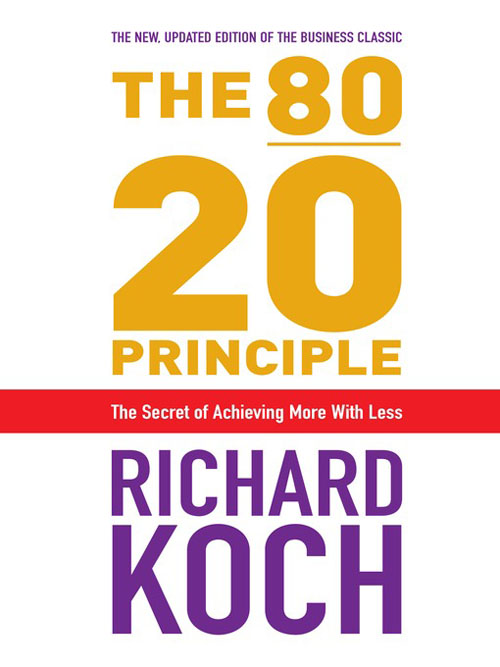
80 20 rules


Can you understand what it is? 
If not, ask google, yahoo, bing.
Understand this, you'll get simplelife.


All images belong to its rightful owner, let me know if I cant borrow.

When 95% happens in the last 5% of its time

This is another interesting fact [95:5]. Most of of may be familiar with Pareto law, or the 80:20 rule.
But this 95-5 has turns many events upside down. Wealth destroyed as well is created when this happens.

Who are the losers? Sad to say in this event the majority is at losing end. Only the contrarian wins.


In the above example which happens nearly a century ago, you see the tides is slowly rising and it takes about 4 years to developed but took less than 5% of the total event time to rise 95% of its original value.

So next time when you see some response like "nah, it won't happen", think again because when it happens you might want to do like this.....


Rule of 72

72 rules? No, it is a rule in investment. Once you know this rule, it will change your investing return horizon. The hunt will start and maybe you will not consider fixed deposit at all! Well, at least for me.

A rule stating that in order to find the number of years required to double your money at a given interest rate, you divide the compound return into 72. The result is the approximate number of years that it will take for your investment to double.
For example, if you want to know how long it will take to double your money at 12% interest, divide 12 into 72 and you get six years.
You can also run it backwards: if you want to double your money in six years, just divide 6 into 72 to find that it will require an interest rate of about 12 percent.

Read more here and play with the calculator HERE


Tips for Surviving Your Worst Work Days

  1. Don't promise what you can't deliver.
  2. Learn to manage your emotions, instead of letting them control you.
  3. Cultivate a sense of humor.
  4. Resist perfectionism.
  5. Resist micromanaging (of yourself and others).
  6. Get the sleep you need.
  7. Try getting to work 10-15 minutes early.
  8. Take regular breaks.
  9. Take a walk at lunch, or do some stretching exercises, or jumping jacks, or something.
  10. Don't overdo the caffeine.
Dedicated to my 9 - 5 friends...

Things An Identity Thief Won't Tell You

Former identity thieves confess the tactics they use to scam you.

Check your bank and credit card balances
at least once a week.
I can do a lot of damage in the 30 days between statements.

Credit cards have an embedded chip
and require a PIN, which makes them a lot harder to hack. Here, I can duplicate the magnetic stripe technology with a $50 machine.

If a bill doesn’t show up when it’s supposed to
, don’t breathe a sigh of relief.
Start to wonder if your mail has been stolen.

You throw away the darnedest things—preapproved credit card applications
, old bills, expired credit cards, checking account deposit slips, and crumpled-up job or loan applications with all your personal information.

If you see something that looks like it doesn’t belong on the ATM
or sticks out from the card slot, walk away. That’s the skimmer I attached to capture your card information and PIN.

Love that new credit card that showed up in your mailbox
. If I can’t talk someone at your bank into activating it (and I usually can), I write down the number and put it back. After you’ve activated the card, I start using it.

From Reader's Digest Magazine

What they say...

Silver